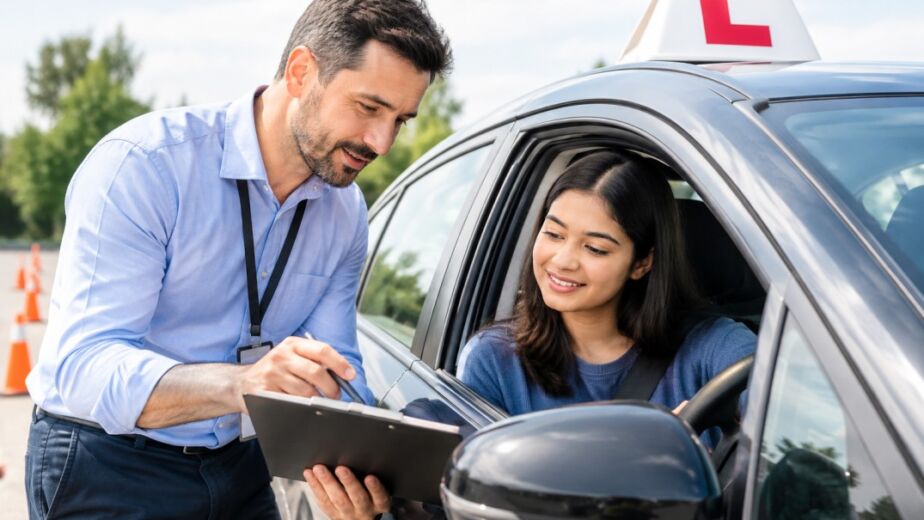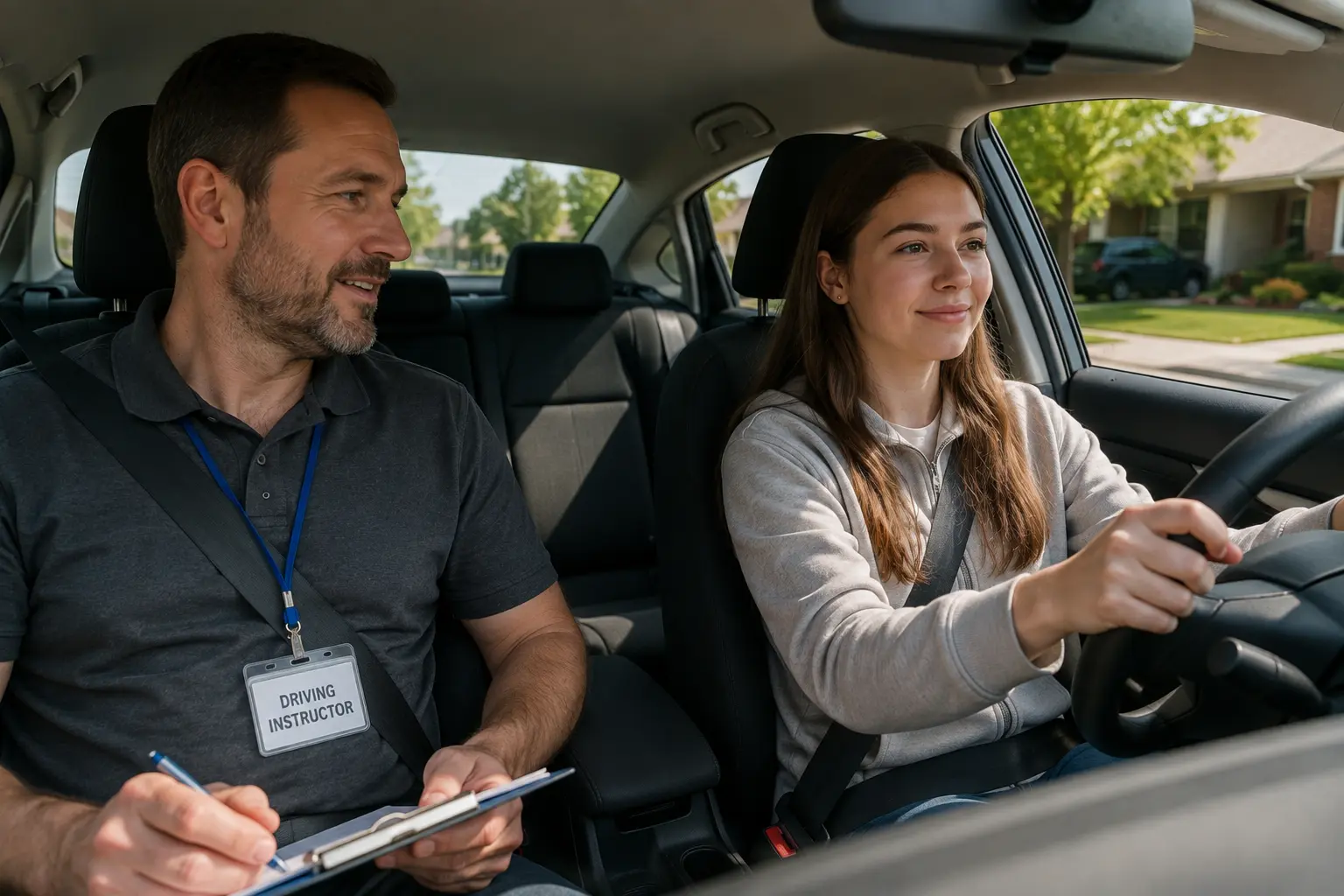
Most new drivers in Ontario need between 10 and 20 hours of professional in-car instruction to pass the G2 road test. The lower end applies to students who practice regularly between lessons or bring some prior experience. The higher end applies to first-timers, nervous drivers, and those who have little access to a supervised practice vehicle.
That range is honest, but it skips something important: the number of lessons you need and the number you are required to take are not the same thing. Understanding the difference is what helps you plan your time and your budget properly.
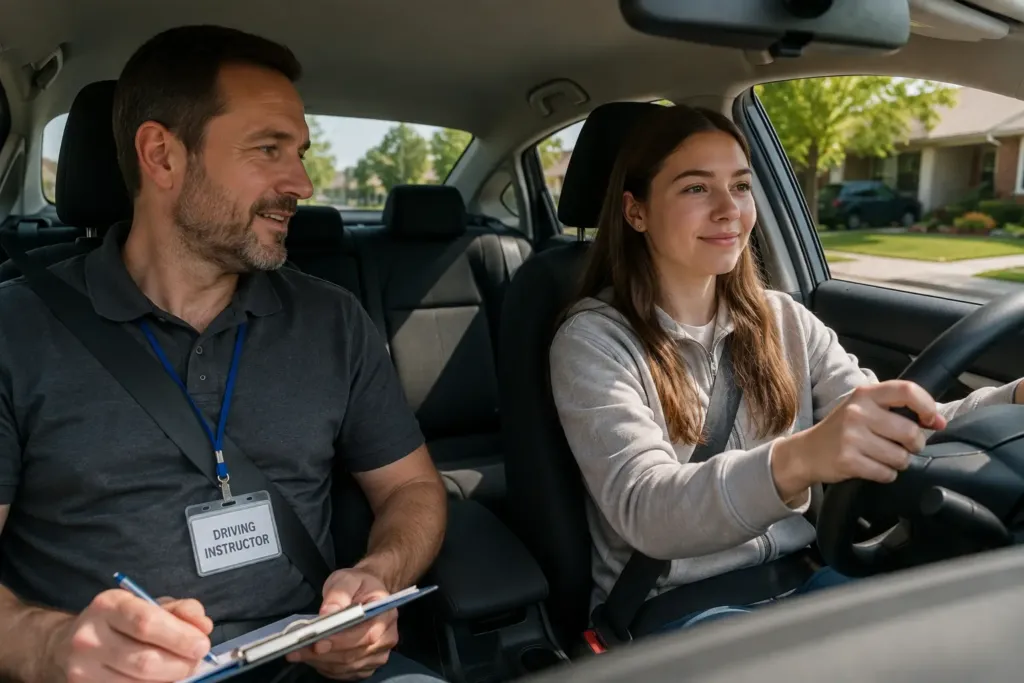
What the MTO Actually Requires
Ontario’s Ministry of Transportation does not set a minimum number of private driving lessons. There is no rule saying you must take 10 or 20 lessons before booking your G2 road test.
What the MTO does require — if you want to qualify for the G2 road test at the 8-month mark instead of 12 — is completing an approved Beginner Driver Education (BDE) course. Every MTO-approved BDE program must include:
- 20 hours of classroom or online theory instruction
- 10 hours of in-car training with a certified instructor
- 1 hour of in-car observation
The 10 in-car hours are baked into every approved package. They are not optional. You complete them as part of the course, and your school reports them directly to the MTO on your behalf. Once that certificate is on your driving record, you are eligible to book your G2 road test at 8 months rather than waiting 12. So if you are enrolling in a BDE course, the baseline answer to “how many lessons do I need?” is already answered: 10 hours, included in your package. The real question is whether 10 hours is enough to feel ready.
Is 10 Hours Enough to Pass the G2?
For some students, yes. For many, the honest answer is not quite. The MTO’s 10-hour minimum reflects what is required to learn the fundamentals — vehicle control, lane changes, parking, intersections, and basic road awareness. A skilled instructor can cover a lot of ground in 10 well-structured hours, especially when a student is also practicing with a parent or guardian between sessions.
But arriving at 10 hours does not automatically mean you are test-ready. Your instructor should give you an honest read before your final lesson. If your mock evaluation shows consistent hesitation, missed observations, or difficulty with the specific maneuvers the G2 examiner tests, extra lessons are the sensible next step.
A practical rule: if you do not feel confident after your 10th lesson, adding 5 more targeted lessons is almost always worth it. One or two retake fees cost more than a few extra hours of instruction, and the confidence going into the test matters.
Factors That Affect How Many Lessons You Personally Need
Every student starts from a different place. Here are the factors that most consistently change how many hours someone needs.
Prior Driving Experience
Students who have spent time driving on private property, operated a vehicle in another country, or even regularly driven farm equipment tend to build on-road skills more quickly. The muscle memory of steering, braking, and checking mirrors is already partially formed.
Students with no experience at all start from zero. The first two or three lessons are often spent entirely on basic vehicle control before anything resembling road driving begins. This is normal — it just means the early lessons cover less distance and take more mental energy.
How Often You Practice Between Lessons
This is the single biggest factor most students underestimate. Professional instruction sets the foundation, but retention drops quickly when lessons are spaced weeks apart and there is no practice in between.
Students who practice with a parent or licensed adult two or three times a week between lessons regularly need fewer professional hours to reach the same level of readiness as students who only drive during booked lessons. If you have access to a vehicle and a willing supervisor, use them.
Age and Maturity
Younger teens, particularly those who have just turned 16, sometimes take more lessons not because they cannot learn to drive but because the broader judgment and spatial reasoning skills are still developing. There is nothing wrong with needing more time at 16 than at 20. Patience from both the student and the family makes the difference.
Anxiety Behind the Wheel
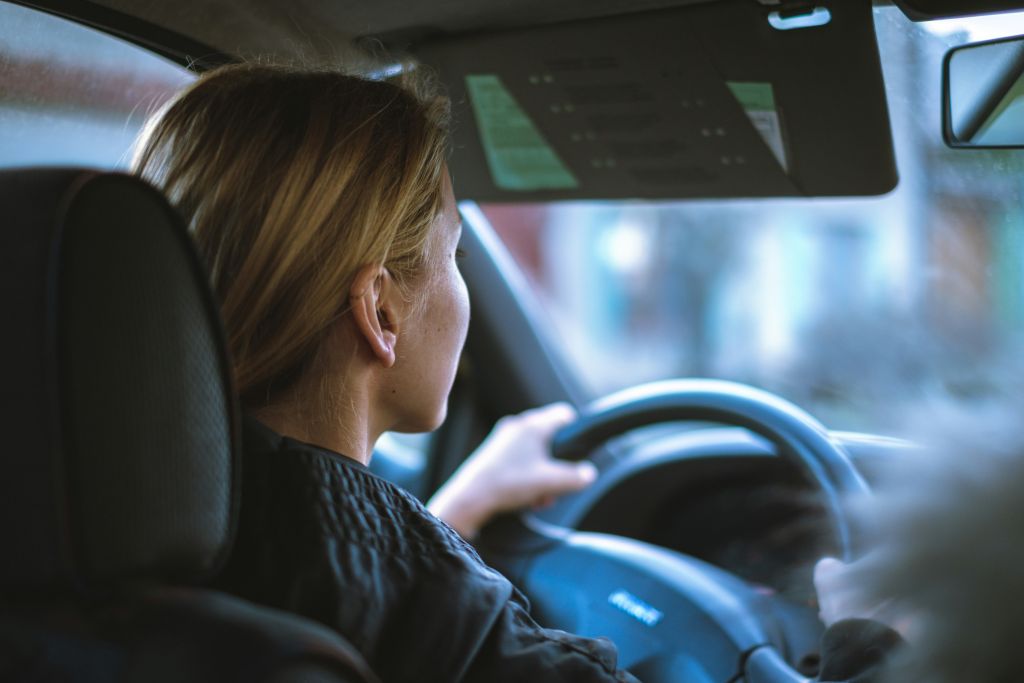
Driving anxiety is more common than most families expect. Some students freeze at busy intersections. Others become rigid and overcautious in a way that actually creates road risk. This is not a character flaw — it is a response to the real pressure of being responsible for a moving vehicle in traffic.
For anxious students, the number of lessons needed is less important than the pace of those lessons. Rushing an anxious driver through 10 hours to meet a deadline tends to produce poor results. A few extra hours spaced at a comfortable pace, with an instructor who adjusts their approach rather than simply repeating the same instruction, is what actually helps. Good instructors recognize anxiety early and shift their lesson plan accordingly.
Access to a Practice Vehicle
Students who cannot practice between lessons — either because there is no family vehicle available or because no licensed adult can supervise them — will typically need more professional hours to build the same level of road confidence as students with regular access. If this describes your situation, factor it into your lesson planning from the start.
The Quality of Instruction
Ten hours with an instructor who adjusts to your pace, explains the why behind each skill, and gives honest feedback produces different results than 10 hours of passive supervision. When you are evaluating driving schools, this is worth thinking about. First-attempt pass rates are not published in Ontario, but instructor reviews and word-of-mouth from recent students tell you a lot.
What the BDE Package Covers in Practice
Understanding what is actually packed into your 10 in-car hours helps you know what to expect and where you might need more time.
A typical BDE in-car curriculum across the 10 hours covers:
- Vehicle controls, mirrors, and seating position
- Basic steering, acceleration, and smooth braking
- Intersections, right-of-way, and traffic signals
- Lane changes and safe passing
- Parallel parking and 3-point turns
- Merging onto higher-speed roads
- Hazard perception and defensive habits
- A practice run that mirrors the G2 road test
The later lessons, usually the 8th through 10th, function increasingly like a mock test. A good instructor will be honest about where you stand and whether you are genuinely ready to book your G2 or whether more time would serve you.
What About Newcomers to Canada with Prior Driving Experience?
Many adults arriving in Ontario already hold a foreign licence and have years of real road experience. The learning curve looks different for this group.
Ontario does not automatically recognize foreign licences for long-term use. After 60 days, newcomers must begin the graduated licensing process — starting with the G1 knowledge test and eventually the G2 road test.
That said, experienced drivers from other countries often move through the in-car portion of BDE more quickly than first-time drivers. The core vehicle control skills are already there. The adjustment is usually about Ontario-specific rules, road signs, and the specific expectations of the DriveTest examiner. Some newcomers need only the BDE minimum; others benefit from a few additional hours focused on Ontario road scenarios and the G2 test format.
How Many Extra Lessons Should You Budget For?
If you are building a realistic budget for your driving school experience, here is a sensible framework:
The BDE minimum (10 hours): A reasonable starting point for a student who has some supervised practice access and is not particularly anxious.
10 + 5 extra hours: The most common real-world outcome for a typical first-time driver with limited between-lesson practice. Budget for this range and treat the extra lessons as contingency, not failure.
10 + 10 or more extra hours: Realistic for highly anxious students, very young teens, or students with no access to a practice vehicle between professional lessons.
Private lessons at Sunny Safeway are available at $50 per hour on a pay-as-you-go basis, so adding lessons after your BDE package is straightforward and does not require committing to a new package upfront.
Signs You Are Ready to Book Your G2 Road Test
Instead of thinking about a fixed number of lessons, it is more useful to think about readiness indicators. Book your test when:
- You can navigate a variety of intersections without prompting from your instructor
- Shoulder checks and mirror use happen automatically, without reminders
- You can parallel park and complete a 3-point turn reliably, not just occasionally
- You feel calm rather than tense at the start of a lesson
- Your instructor gives you the honest green light
Booking too early to beat a deadline is one of the more common and expensive mistakes new drivers make. A failed road test in Ontario costs $53.75 to rebook, plus the cost of rescheduling a vehicle if you are using an instructor’s car. More importantly, a second attempt means more waiting.
Booking Your G2 in Durham Region
If you are based in Ajax, Oshawa, Whitby, Pickering, or Bowmanville, the local G2 driving lessons package at Sunny Safeway includes the 20-hour online BDE course and all 10 in-car hours, with instructors who come to you.
If you decide you want extra lessons after completing the package, private lessons can be added without any new commitment. And if you do not have a vehicle available on test day, the Gold Package includes the use of the instructor’s car at Oshawa DriveTest — one less thing to arrange.
For timing, completing your BDE package and booking early through the early road test booking service can significantly reduce how long you wait for a test date.

Quick Reference: Lesson Count by Driver Profile
| Driver Profile | Estimated Professional Hours Needed |
|---|---|
| Some prior supervised practice, low anxiety | 10–12 hours |
| First-time driver, regular practice between lessons | 12–16 hours |
| First-time driver, limited between-lesson practice | 15–20 hours |
| Anxious driver, teen or adult | 15–20+ hours |
| Newcomer with foreign driving experience | 8–12 hours |
These are estimates, not guarantees. Your instructor’s read on your actual readiness is worth more than any number on a chart.
The Honest Answer
There is no single right number of driving lessons. The minimum required by the BDE is 10 in-car hours, and that is a solid foundation. Whether you need more depends on where you are starting from, how consistently you practice, and how honestly you measure your own readiness.
Most students are well-served by budgeting for 10 to 15 professional hours and then letting their instructor guide the decision from there. The goal is not to hit a number — it is to drive safely and pass your test the first time.