
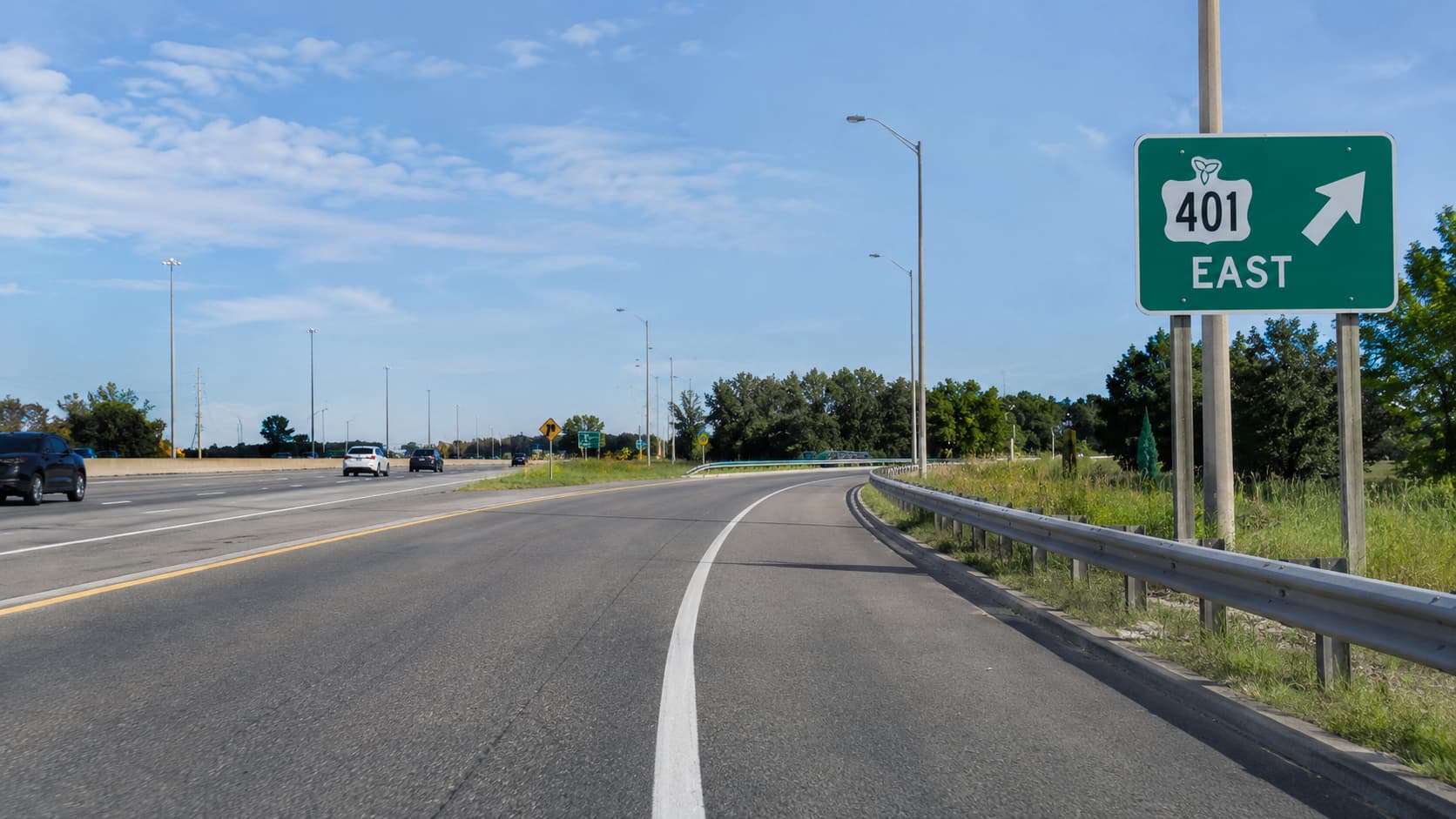
If you’ve been holding your G2 licence for a while, you might be wondering whether the full G licence is really worth pursuing right now, or whether it makes much practical difference to your day-to-day driving.
The short answer: it depends on how long you plan to stay at the G2 stage and what kind of driving you’re doing. But there are real differences between the two, including rules that follow G2 holders even if they rarely think about them, and a licensing time limit that keeps running in the background.
Here’s a clear breakdown of what each licence stage actually means, what the G road test involves, and when it genuinely makes sense to go for your full G.
What Is Ontario’s Graduated Licensing System?
Ontario uses a three-stage graduated licensing system managed by the Ministry of Transportation Ontario (MTO). The stages are G1, G2, and full G. Each level progressively removes restrictions and adds driving privileges as you gain experience and pass the required tests. Ontario.ca notes that you have up to five years to finish the whole process.
Most drivers in Durham Region are well past the G1 stage. The question that comes up more often is: what actually changes between G2 and G?
G2 Licence: What You Can and Cannot Do
Your G2 licence gives you significant freedom compared to G1. You can drive alone, on any road, at any time of day. But several restrictions still apply.
G2 Restrictions in Ontario
Zero blood alcohol: You must maintain a zero blood alcohol level while driving on a G2, regardless of your age. With a full G, zero tolerance only continues to apply if you are 21 or under.
Passenger limits (drivers 19 and under): For the first six months of holding a G2, drivers aged 19 or under can carry only one passenger aged 19 or under between midnight and 5 a.m. After six months, that rises to three passengers aged 19 or under. These limits do not apply if a fully licensed driver with at least four years of experience is in the car, or if your passengers are immediate family members. Drivers aged 20 and older do not face this restriction.
Seat belts: Every passenger must wear a seat belt, and you cannot carry more passengers than there are seat belts available.
Handheld devices: Handheld phones and other devices are off limits while driving. This applies to every driver, but novice drivers can face tougher consequences for offences on their licence record.
What G2 Holders Can Do
You can drive on all Ontario roads, including 400-series highways, expressways and the 407 ETR, at any hour, without an accompanying driver. You can carry passengers too, subject to the night-time limits above if you are 19 or under.
For most daily driving in Durham Region, a G2 is genuinely functional. That is part of why many people sit at G2 far longer than they planned.
Full G Licence: What Changes
Once you pass the G road test, the G2 conditions fall away. Here is what that means concretely.
Zero-BAC rule eased for most drivers: If you are 22 or older, you are no longer under the blanket zero blood alcohol requirement that applies to G2. That does not make drinking and driving any safer. Ontario can still suspend your licence at 0.05, and the criminal limit is 0.08. If you are 21 or under, zero tolerance continues to apply even with a full G.
No more night-time passenger limits: The midnight to 5 a.m. passenger limits that apply to G2 drivers aged 19 or under disappear once you hold a full G.
Insurance rates: This is one of the most financially significant differences. Many insurance providers treat G2 holders differently from full G licence holders, often charging higher premiums. Getting your full G frequently results in a noticeable reduction in your insurance rate, particularly if you are a younger driver. It is worth calling your insurer to get the actual numbers for your policy.
The five-year time limit no longer applies: Ontario gives you up to five years to finish graduated licensing. Once you pass the G road test, that clock stops mattering. If you reach the five-year mark without your full G, you may have to requalify at G2 or start over at G1 (more on that in the FAQ below).
A step toward supervising a G1 driver: A G1 driver must be accompanied by a fully licensed driver with at least four years of driving experience. Holding a full G is the first requirement, so your own licence stage matters if a family member is learning to drive.
What the G Road Test Actually Involves
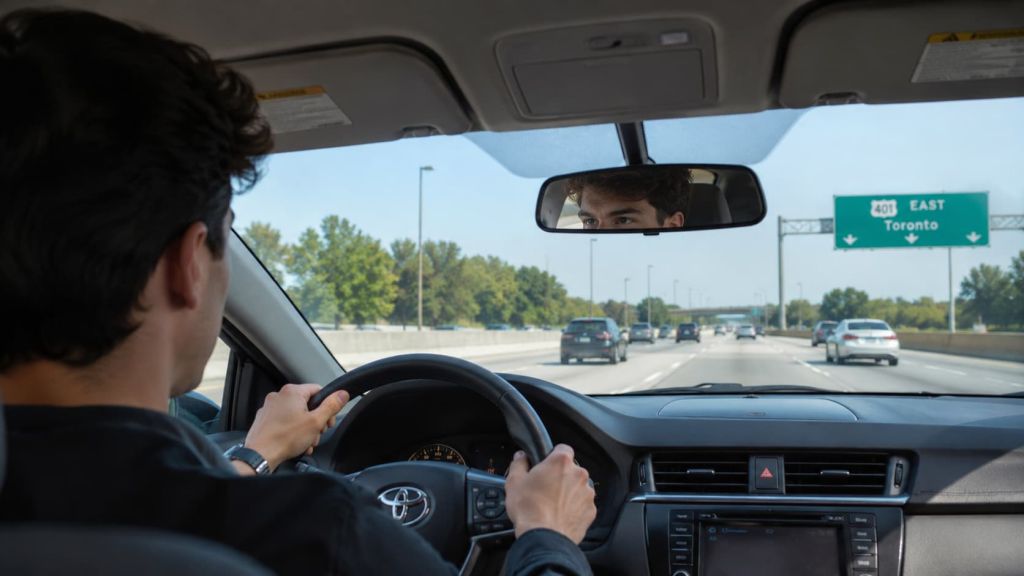
This is where a lot of G2 holders have outdated or incomplete information. The G road test, also commonly called the G2 exit test, is not simply a harder version of your G2 road test. Its defining feature is a highway component that the G2 test does not have.
The Focus Is Highway Driving
The G road test is built around highway and expressway driving. Expect to be assessed on things like:
- Merging from a ramp onto a 100 km/h highway
- Lane changes at highway speed
- Maintaining appropriate following distance in fast-moving traffic
- Navigating exit ramps and off-ramp transitions
- Holding a consistent speed in mixed highway traffic
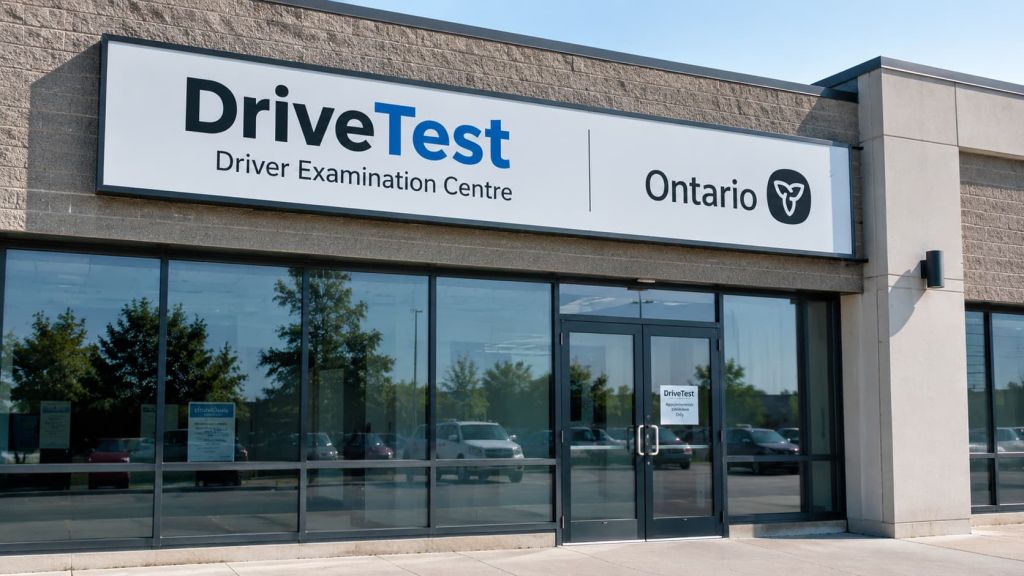
For G2 holders in Durham Region, that typically means highways such as the 401 and 412, depending on your DriveTest centre and route. These may be the same corridors you already use every day, but now an examiner is evaluating you.
Will Parking and Other City Skills Be Tested?
Highway driving is what separates the G test from the G2 test, but it is not necessarily the only thing you will be assessed on. DriveTest describes the G road test as an assessment of more advanced driving skills and gives highway driving and parallel parking as examples. Some driving resources describe the test as almost entirely highway-based, and the exact mix can vary by route and examiner. The safe approach is to be fully comfortable on the highway and to keep your parking and city driving sharp as well.
The Declaration of Highway Driving Experience
Before your G road test, you will be asked to declare your recent highway driving. The requirement is that you have driven on a road with a posted speed limit of 80 km/h or higher, including 400-series highways, at least five times in the three months before your test. If you do not meet it, your test can be declared out of order and you lose 50% of the test fee.
If you have been avoiding highway driving or have not had consistent access to a car, build up those highway trips well before you book your test date.
The Cost
The G road test costs $91.25 per attempt (set by the MTO), and a retest costs the same again. Fees are subject to change, so confirm the current amount on DriveTest before you book. Preparing properly reduces the chance of paying for a second attempt.
When Does It Make Sense to Go for Your Full G?
There is no single right answer, but here are the scenarios where moving forward genuinely pays off.
Your five-year window is closing. Ontario gives you up to five years from the start of the process to earn your full G. If you are approaching that mark, booking your G test should be a priority. Missing it can mean paying to requalify at G2 or starting over at G1.
You are paying high insurance premiums. If your insurer is pricing you as a G2 holder, upgrading to a full G can reduce your annual premium enough to justify the effort well within the first year.
You drive on the highway regularly. If 401 or 412 driving is already part of your routine, the G test is testing what you already do. There is very little new to learn, just new conditions to demonstrate it under.
You are 19 or under and the night-time passenger limits affect you. If the G2 passenger limits create practical problems in your daily life, the full G removes them entirely.
You want to help a G1 driver practise. An accompanying driver needs a full G and at least four years of driving experience. If a family member is learning to drive, earning your G is a step in that direction.
Preparing for the G Road Test in Durham Region
The G test is straightforward if you have genuine highway experience, but it is not automatic. Drivers who struggle tend to fall into two groups: those who have rarely driven on Ontario’s 400-series highways, and those who have highway experience but have developed habits that pass unnoticed in daily driving and draw demerits under examination conditions.
Common issues include following distance at highway speeds, hesitation on on-ramps, and inconsistent lane discipline during lane changes.
A few focused G driving lessons with an instructor who knows the Oshawa DriveTest routes can make a meaningful difference. Not because the test is mysterious, but because practising the specific merge points, ramp configurations, and decision-making patterns that the examiner is watching for gives you a real advantage.
If you need to book your road test, Sunny Safeway also offers early road test booking assistance to help you secure a date sooner than the standard wait.
Quick Comparison: G2 vs G Licence
| G2 Licence | Full G Licence | |
|---|---|---|
| Blood alcohol | Zero tolerance at any age | Zero tolerance only if you are 21 or under |
| Night-time passenger limits (19 or under) | Yes, easing after 6 months | No |
| Highway driving allowed | Yes | Yes |
| Licensing time limit | Counts toward the 5-year window to finish graduated licensing | Process complete |
| Insurance rates | Often higher | Often lower |
| Accompany a G1 driver | No | Yes, with at least 4 years of driving experience |
| Road test focus | Basic city driving skills | Highway driving plus more advanced skills |
Top 6 Reasons G2 Holders in Durham Region Should Go for Their Full G
If you are still on the fence, here are the six reasons that matter most for drivers in Ajax, Oshawa, Whitby, Pickering, and Bowmanville.
1. The five-year window is the clock that matters.
Ontario gives you up to five years from the start of the process to earn your full G. Reach that point without it and you may need to requalify at G2 by passing the road test again, or start over from G1, paying the fees each time. Many G2 holders do not realize how quickly the time passes.
2. Insurance savings are often on the table.
Many Ontario insurers charge G2 holders more than full G holders. For younger drivers especially, the annual difference can help offset the cost of a few G driving lessons and the test fee. Ask your insurer for a quote so you know what your own savings could look like.
3. The highway is the main new skill, and you may already have it.
The G road test adds a highway component that the G2 test does not have. If you already drive the 401 or 412 as part of your routine, you are practising the core of what the examiner will assess.
4. You move closer to supervising a G1 driver.
An accompanying driver needs a full G and at least four years of driving experience. If a younger sibling, partner, or child is learning to drive, your own licence level determines whether you can eventually help them practise legally.
5. The night-time passenger limits disappear.
G2 holders aged 19 or under face limits on passengers between midnight and 5 a.m. The full G licence removes them entirely.
6. Highway driving in Durham is already part of your life.
Durham Region is built around the 401, 412, 418, and 407 ETR. If you commute, do a grocery run in Whitby, or visit family in Pickering, you are already driving on highways regularly. The G test evaluates those skills in a structured setting. It is not asking you to do anything foreign.
Frequently Asked Questions: G2 vs G Licence in Ontario
Can I drive on the highway with a G2 licence?
Yes. G2 licence holders can drive on all Ontario roads, including 400-series highways and the 407 ETR, at any time of day, without an accompanying driver. The G2 does not restrict you to local roads.
How long do I have to hold my G2 before taking the G road test?
You must hold your G2 licence for a minimum of 12 months before you can take your G road test. A Beginner Driver Education (BDE) course does not shorten this waiting period. The 12-month minimum applies regardless of any training you have completed.
Does the G road test include parallel parking or three-point turns?
The G road test is built around highway driving, but the examiner can also assess other advanced skills. DriveTest lists parallel parking as an example of what the G road test can cover, so it is worth keeping that skill sharp alongside your highway practice. Do not assume the test will be highway-only.
What happens if my G2 expires before I take the G test?
Ontario gives you up to five years to finish graduated licensing, counted from the start of the process rather than from the day you receive your G2 licence. If you are approaching that point without a full G, DriveTest says you can requalify as a G2 driver for another five years by passing the G2 road test again (fees apply). Once your novice licence has expired, you may need to start over at G1. Check your licence dates now rather than later.
How much does the G road test cost in Ontario?
The G road test costs $91.25 per attempt, as set by the Ministry of Transportation Ontario, and a retest costs the same again. Fees can change, so confirm the current amount on DriveTest when you book. Because every attempt costs the same, preparation matters.
Do I need a BDE course to take G driving lessons or book my G road test?
No. A Beginner Driver Education course is recommended but not required. Its only benefit is shortening your G1 to G2 wait from 12 months to 8. It has no effect on the 12 months you must hold your G2 before the G road test, and no course is needed to book that test or to take private G driving lessons.
Will getting my full G lower my car insurance?
In most cases, yes. Many Ontario insurance providers charge G2 licence holders more than full G holders, so upgrading to a full G licence can lower your premium. The exact savings vary by insurer and driver profile, so request an updated quote from your provider once you pass.
For most G2 holders in Durham Region, the full G licence is worth pursuing as soon as you are eligible. Not because G2 leaves you helpless, but because the insurance savings, the removal of remaining restrictions, and the five-year licensing window all work in your favour the sooner you get it done.
The G road test is not a repeat of your G2. Its key difference is the highway, and if you drive on the 401 or 412 regularly, you are already doing much of what it requires. A little focused preparation goes a long way.