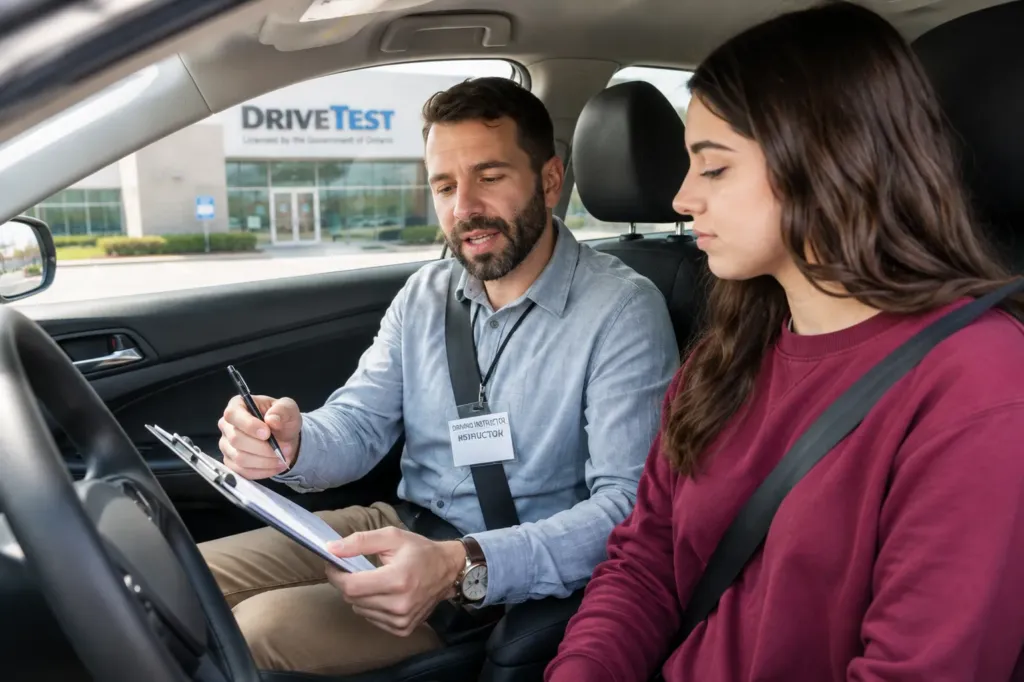
Your G2 road test date is locked in. You have been practising, your G1 hours are done, and now the question is whether your preparation matches what actually happens at the Oshawa DriveTest Centre on test day.
Generic advice only gets you so far. Oshawa has its own route, its own road quirks, and specific things that catch candidates off guard. This guide covers all of it: the centre location, the roads you will drive, what examiners look for, and the ten things that separate drivers who pass from those who have to rebook.
About the Oshawa DriveTest Centre
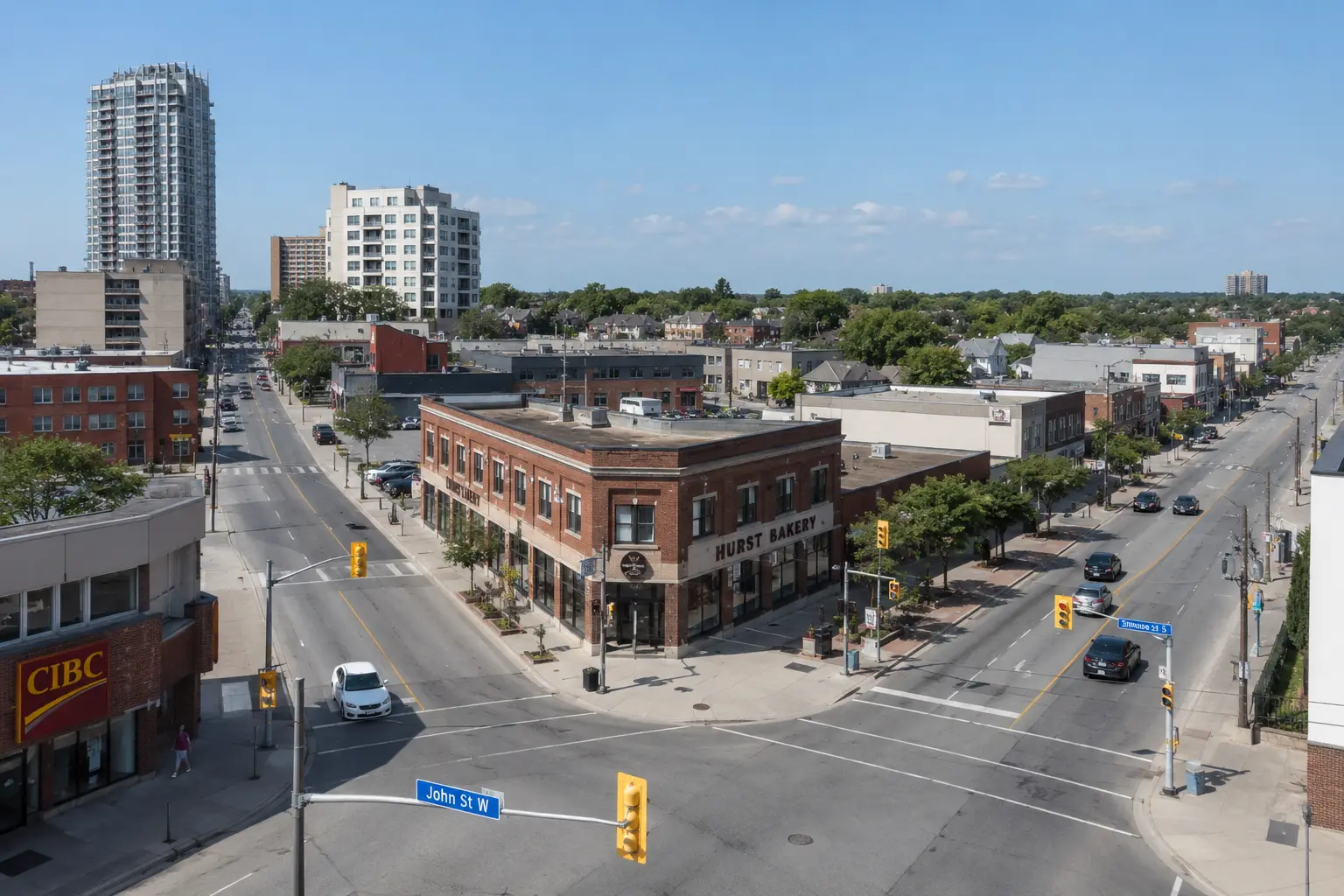
The Oshawa DriveTest Centre is located inside Midtown Mall at 200 John St W, Oshawa, ON L1J 2B4. It sits near the intersection of John Street West and Simcoe Street South in central Oshawa. The centre handles G2 and G road tests, knowledge tests, and several other licence classes for Durham Region candidates.
You can book online at drivetest.ca. The centre is open Monday to Friday with extended weekday hours and Saturday availability, which makes it one of the more flexible testing locations in the region for students and working candidates alike.
One thing worth knowing before test day: parking and arrival at Midtown Mall can be busier than it looks on the map, especially on weekday mornings when tests are scheduled back to back. Arrive at least 15 minutes early, check in at the counter, and leave yourself enough time to get settled before your name is called.
What the Oshawa G2 Route Looks Like
DriveTest Ontario does not publish an official route map, and examiners can vary the path depending on traffic conditions on the day. That said, based on consistent reports from test-takers at the Oshawa centre, the G2 route uses a recognizable set of local roads.
You will typically start by exiting the Midtown Mall parking area and turning onto John Street West. Pay immediate attention here: the area around the centre sits in a 40 km/h zone, and many candidates drift up to 50 km/h within the first block without realising it.
From John Street West, the route commonly moves through a mix of downtown and residential streets. Streets that appear regularly in reported routes include Park Road South, Colborne Street West, Arena Street, Adelaide Avenue West, Centre Street South, Simcoe Street South, and Bond Street West. The residential sections on streets like Bond Street West and Punshon Avenue are where parallel parking, three-point turns, and stop-sign compliance are typically evaluated.
The route covers approximately 7 to 9 kilometres and takes around 15 to 22 minutes depending on traffic and which variation your examiner chooses.
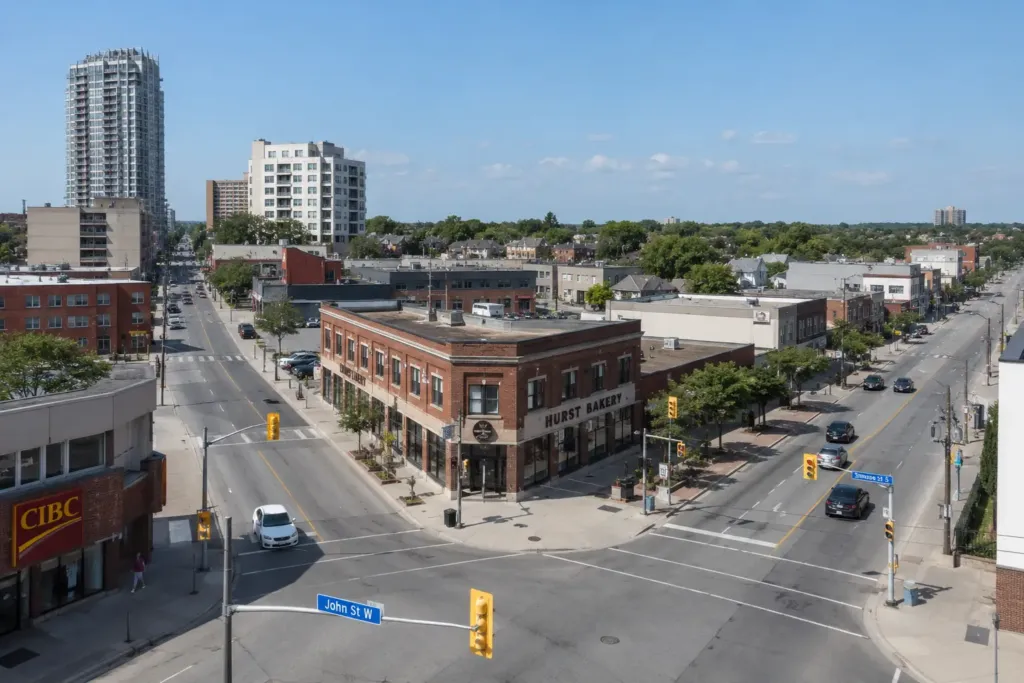
What this means for preparation: you should be comfortable navigating urban intersections with pedestrians and bus routes, driving through quiet residential blocks at the right speed, and executing parking manoeuvres on a normal residential street rather than an empty lot.
What Examiners Watch For
The examiner uses a standardised score sheet with categories including starting, backing, general driving, intersections, turns, parking, and stopping on a hill where applicable. Minor errors result in point deductions. Major errors or a single dangerous action end the test immediately.
The most consistent themes across G2 test failures at any Ontario centre (and Oshawa is no different) come down to five areas.
Observation. Examiners track your eyes. You are expected to check your mirrors every five to eight seconds during general driving, and to do a full shoulder check (not just a mirror glance) before every lane change, merge, and pull away from the curb. Mirror-only checks are one of the most common silent reasons candidates fail. It looks like a check, but the examiner knows the difference.
Complete stops. Rolling through a stop sign is an automatic failure at the G2 level. This is the single most cited reason for failing across Ontario. You must come to a full, wheels-not-moving stop. On Oshawa’s residential route, stop signs appear frequently, and the examiner will be watching every single one.
Speed management. Driving too fast is an obvious problem, but driving noticeably below the limit also gets marked. The 40 km/h zone around Midtown Mall trips up candidates who are not watching for posted signs. In residential areas, 40 km/h is common; on Adelaide Avenue and other arterial roads, the limit rises and you need to match it confidently.
Signalling. Signal every turn and every lane change, including during three-point turns, when pulling away from a curb, and when returning from a parking manoeuvre. Forgetting to cancel a signal after a turn is also a minor error that accumulates.
Lane positioning. Turn left from the left lane and return to the left lane. Turn right from the right lane. Do not drift wide on turns or clip the centreline. On multi-lane roads in Oshawa’s downtown core, stay in your lane through the entire turn.
10 Tips to Pass the G2 Road Test in Oshawa
Drive the Route Before Test Day
Since the Oshawa route is generally consistent, spend time driving the roads around the centre before your test. Drive on John Street West, Simcoe Street South, Park Road, and Adelaide Avenue. Walk through a stop-sign block in a quiet residential area. Knowing what the roads feel like reduces surprises on the day itself.
Know the 40 km/h Zone at the Centre Exit
The moment you leave Midtown Mall and turn onto John Street West, you are in a 40 km/h zone. This is one of the most common speed-related errors at the Oshawa centre. Set your speed deliberately and check your speedometer before you focus on anything else.
Make Your Shoulder Checks Visible
Shoulder checks should be obvious head turns, not a subtle glance. Examiners need to see that you are physically looking over your shoulder, not just moving your mirrors. Practise making checks that are clear and deliberate. Turn your head fully before every lane change, every merge, and every pull away from the curb.
Treat Every Stop Sign as a Full Stop
Count it. Two full seconds with wheels still before you move. This is not the place to roll through, even if the intersection looks clear from fifty metres away. On Oshawa's residential route, the examiner is watching every stop-sign intersection, and one incomplete stop can end your test.
Practise Parallel Parking on a Real Street
Parallel parking in an empty parking lot and parallel parking between two parked cars on a residential street feel completely different. You must park within 30 centimetres of the curb. Practise on quiet streets that resemble what you will see on the test, not just in open spaces.
Signal Consistently, Including When You Think It Does Not Matter
Signal before every turn, every lane change, and every pull away from the curb. Signal when re-entering traffic after a manoeuvre. Signal before returning to the lane after parking. Make it a habit so thorough that you never have to think about it during the test.
Maintain a Steady Following Distance
Stay two to three seconds behind the vehicle ahead. Tailgating is a minor error that accumulates quickly, especially on Oshawa's busier arterial roads where traffic can slow unpredictably near intersections and bus stops.
Do Not Over-Hesitate at Intersections
Excessive hesitation when you have the right of way is a marked error. If the intersection is clear and it is your turn, go. Nervousness that translates into long pauses at green lights or clear four-way stops gets recorded on the sheet.
Arrive Early, Check In Calm
Rushing to a road test adds stress that affects your driving. Arrive at least 15 minutes before your appointment. Check in at the DriveTest counter, hand over your licence and documents, and take a few minutes to breathe before the examiner calls you. A calm start translates into more controlled driving from the first turn.
Take a Mock Test Lesson on the Actual Route
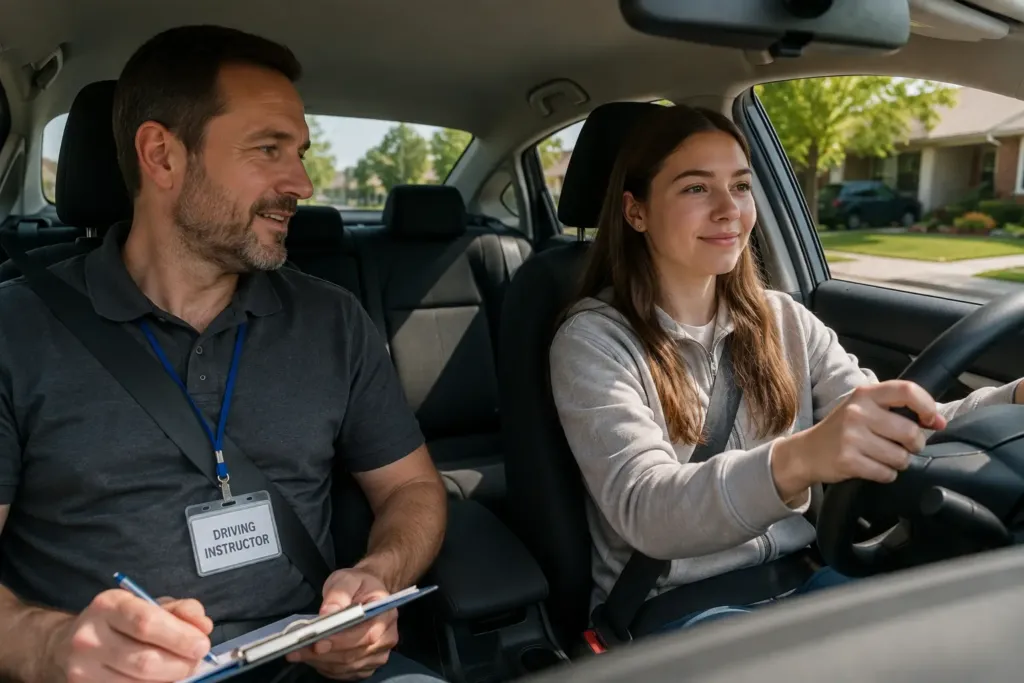
The most effective single preparation step is a lesson with a local instructor who practises you on the Oshawa DriveTest route specifically. A mock test mirrors the conditions of the real exam: the examiner posture, the route, the manoeuvres, the timing. It surfaces errors you cannot find through informal practice with family, and it gives you an honest read on whether you are ready to pass or need another hour of work first.
A Note on Using an Instructor’s Car for the Test
If you do not have reliable access to a vehicle on your test date, this is worth solving in advance. Some candidates book the test before sorting the car situation and end up scrambling. Sunny Safeway’s Gold Package includes the use of the instructor’s vehicle for your G2 road test at the Oshawa DriveTest Centre, a practical option if your family car is unavailable or if you simply want to test in the same car you trained in.
When Should You Book?
Once you have held your G1 for eight months after completing an MTO-approved Beginner Driver Education course (or twelve months without one), you are eligible to book. If you arrived through the foreign license exchange path, your timeline may differ depending on how much driving experience you were credited. DriveTest appointment availability in Oshawa fills up, and popular time slots go fast. If your eligibility date is coming up, book as early as possible rather than waiting until you feel fully ready. Booking early gives you a target date to train toward, and you can always push the date back once with no penalty if you need more time.
Sunny Safeway’s early road test booking guide walks through how to find the earliest available slots and what to watch for when the calendar opens.
Ready to Prepare for the Oshawa G2 Test?
The candidates who pass on their first attempt are not necessarily better drivers. They are better prepared for the specific test they are about to take. Knowing the Oshawa route, understanding what the examiner is watching for, and having done a mock run on the actual streets makes a measurable difference.
If you are working toward your G2 in the Oshawa area, Sunny Safeway Driving School offers G2 driving lessons in Oshawa with instructors who know the local route and train students on the roads around the Midtown Mall centre. Lessons come to you, and test-day prep is part of every package.